Endovascular intervention has quietly revolutionized how we treat blood vessel problems. Instead of large open incisions, today's specialists navigate miniature catheters and stents through the body's natural pathways, fixing problems from the inside out. This guide walks through every major aspect of endovascular intervention procedures — what they are, how they work, who needs them, and what recovery really looks like.
By the end, you'll understand exactly why this minimally invasive field is growing at over 10% per year and why SurgeonsLab is so invested in the simulation training that supports it.
Endovascular Intervention in a Nutshell
Endovascular intervention is a group of minimally invasive, image-guided procedures performed inside (endo) the blood vessels (vascular). Interventional radiologists thread catheters through small skin punctures — often at the groin or wrist — then deploy balloons, stents, coils, or medication precisely where they're needed.
- Minimally invasive: tiny incisions, local anaesthesia, less pain
- Quicker recovery: hospital stays are often 1–2 days versus 7–10 days for open surgery
- Broad uses: aneurysm repair, stroke thrombectomy, peripheral artery disease (PAD) treatments, varicose vein closure, and more
- Explosive growth: over 3 million coronary and 2 million peripheral endovascular interventions occur annually worldwide
Why the Field Is Growing So Fast
Patient Outcomes
Open aortic repair — involving opening the chest or abdomen and clamping the aorta — carried mortality rates near 5%. Modern endovascular aneurysm repair (EVAR) cuts that to about 1.2% in the first 30 days, while slashing hospital time by an average of 4 days.
Aging Populations
By 2030, 1 in 6 people will be over 60. Aortic aneurysms, PAD, and carotid disease all rise with age, driving demand for gentler procedural options that reduce surgical risk.
High-definition fluoroscopy, 3-D road mapping, and fiber-optic shape-sensing catheters now enable millimetre-level accuracy. Robotics may soon let interventional radiologists operate from another room — or another city — while avoiding X-ray exposure entirely.
Common Endovascular Intervention Procedures
The table below summarises the most frequently performed endovascular procedures, what each treats, how it works, and published outcomes data.
| Procedure | What It Treats | How It Works | Hospital Stay | Success / Patency |
|---|---|---|---|---|
| EVAR (abdominal) | Abdominal aortic aneurysm (AAA) | Stent-graft relines weak aorta via groin catheters | 1–2 days | 97% 5-year freedom from aneurysm-related mortality |
| TEVAR (thoracic) | Thoracic aortic aneurysm | Similar to EVAR but in the chest aorta | 2–3 days | 90% freedom from major events at 3 years |
| Carotid Stenting | Carotid artery narrowing (stroke risk) | Self-expanding stent plus embolic filter | Overnight | Major stroke/death ≤3.5% in recent trials |
| Mechanical Thrombectomy | Acute ischemic stroke | Stent-retriever or aspiration catheter removes the clot | 0–2 days | Good functional outcome in 46% vs 26% with drug-only therapy |
| Peripheral Angioplasty / Stenting | Leg PAD / critical limb ischaemia | Balloon expands vessel; stent holds it open | Same-day | 75% 12-month patency with drug-coated devices |
| Endovenous Ablation | Varicose veins | Laser/RF catheter heats and seals the vein | Outpatient | >95% vein closure at 1 year |
Step-by-Step: What Happens During an Endovascular Procedure
Pre-Op Imaging and Planning
Before the procedure, you'll typically have a CTA or MRA scan. At SurgeonsLab, we often use 3-D simulation models so interventional radiologists can practice on a patient-specific replica beforehand — cutting procedure time and reducing X-ray dose on the day.
Access and Navigation
After numbing the skin, a needle is placed into an artery — typically femoral or radial. A sheath is introduced, and contrast dye lets the operator steer under live X-ray imaging with real-time fluoroscopic guidance.
Intervention
Depending on the clinical goal, the interventionalist may:
- Inflate a balloon to crack calcium deposits in a narrowed vessel
- Deploy a stent graft to exclude an aneurysm from blood flow
- Suction a clot using aspiration catheters
- Inject embolic particles or coils to block a bleeding vessel
Closure
Tiny closure plugs or simple pressure seals the puncture site. No large sutures are needed, which significantly reduces infection risk and postoperative discomfort.
Recovery
Most patients walk within hours of the procedure. Discharge is often the next day, with light activity recommended for the first week before a gradual return to normal function.
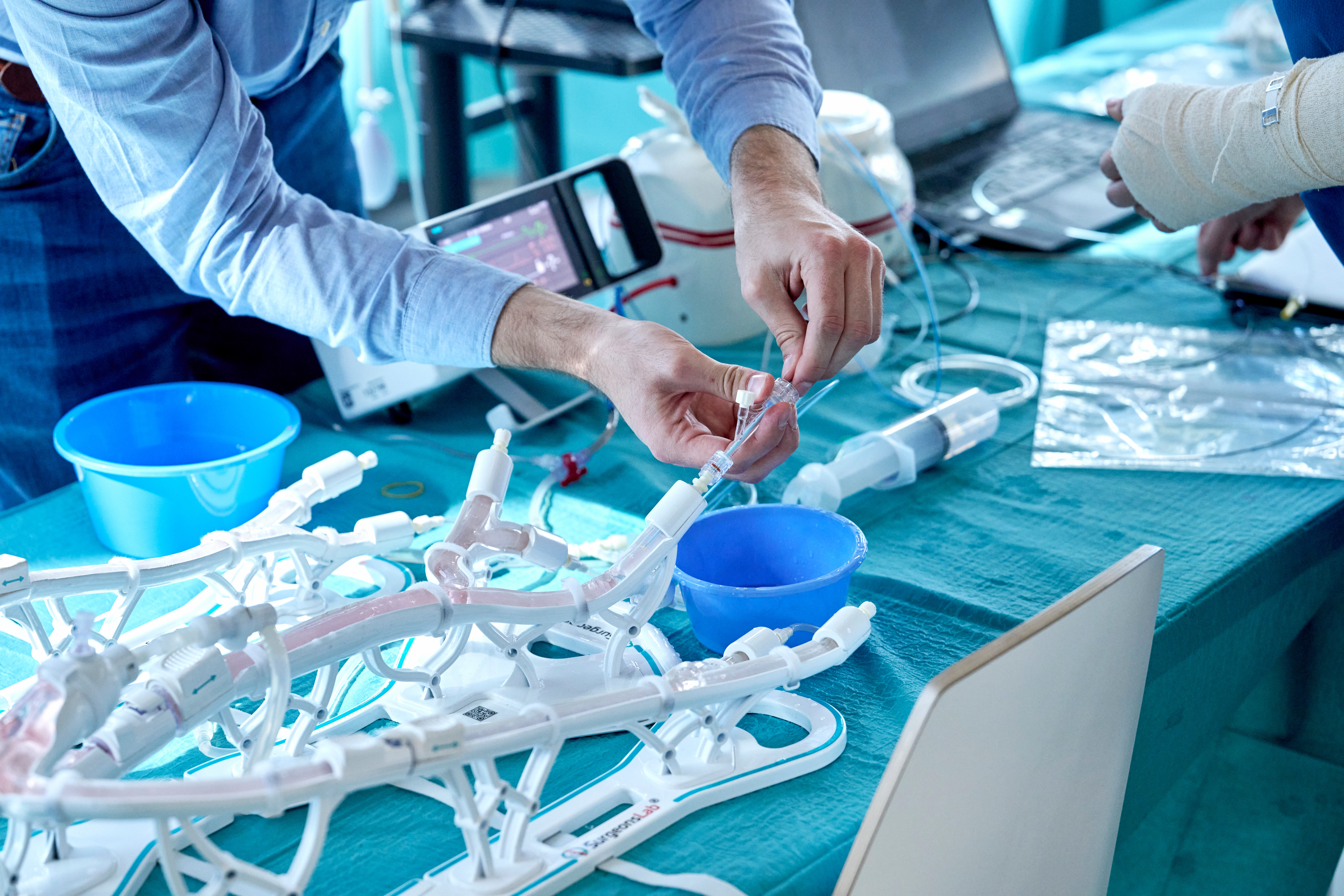
Figure 1. SurgeonsLab interventional radiology simulator configured for endovascular intervention procedure training, including catheter navigation and device deployment.
Risks and Complications
Endovascular procedures carry a favourable safety profile compared to open surgery, but risks exist and should be understood clearly.
- Bleeding / haematoma: less than 3% at catheter access sites
- Endoleak (EVAR): 10–25% incidence, but most are managed with a quick secondary stent procedure
- Stroke (carotid stent): 2–4% in published series
- Kidney stress from contrast: managed by pre-procedure hydration and low-contrast imaging protocols
Overall, major complication rates are lower than comparable open surgeries across almost every category.
Who Is a Candidate?
Endovascular options suit many but not all patients. Key factors include aneurysm anatomy (a minimum of 10 mm of healthy aorta below the kidney arteries is needed for standard EVAR), vessel calibre and tortuosity, comorbidities such as renal failure or severe contrast allergy, and life expectancy — durability matters more for younger patients under 60.
Success Rates and Evidence
- EVAR surpassed open repair in 2003 and now accounts for 78% of intact AAA repairs in the United States.
- Five-year survival after EVAR: 66% overall, with 97% aneurysm-specific survival.
- For chronic limb-threatening ischaemia, using the patient's own vein for bypass still edges out angioplasty (42% vs 57% event rate), but endovascular-first is favoured when no suitable vein is available — per the BEST-CLI trial.
- Stroke thrombectomy volumes rose by more than 400% from 2016 to 2019, reflecting powerful functional gains for patients.
The Future: Robotics and AI Imaging
Robotic catheter platforms already allow operators to sit behind a lead-lined console, cutting radiation by up to 95% and reducing hand fatigue. AI road mapping promises real-time vessel reconstruction without contrast dye, reducing kidney risk. SurgeonsLab's simulators help clinicians train on these emerging tools before they reach their hospital — so the learning curve happens in a safe, controlled environment rather than in the procedure suite.
"Endovascular procedures are changing the landscape of vascular care — offering less invasive treatment, faster recovery, and strong outcomes for patients worldwide."
Pros and Cons of Endovascular Intervention
Advantages
- Shorter stays and faster return to daily life — often a weekend in hospital versus weeks
- Lower infection and blood-loss risk
- Less pain and scarring from 5 mm skin punctures
- Option for high-risk patients previously considered inoperable
Potential Disadvantages
- Lifelong imaging follow-up — typically ultrasound or CT every 6–12 months
- Occasional re-interventions for endoleak or stent blockage (~15% at 5 years for EVAR)
- Device costs can be higher upfront, though overall hospital costs equalize due to shorter stays
Preparing for Your Procedure
- Medication review: blood thinners may need adjustment before the procedure
- Fasting: usually nothing by mouth for 6 hours prior
- Contrast labs: kidney function is checked; IV hydration may be started if needed
- Stop smoking: even 2 weeks of cessation improves vessel tone and outcomes
Life After Endovascular Intervention
Return to Activity
- Desk work: 3–5 days
- Driving: 48–72 hours if no groin discomfort
- Exercise: light walking immediately; full activity at 2 weeks
- Surveillance: ultrasound/CT per schedule to ensure graft integrity
Lifestyle Essentials
- Control blood pressure below 130/80 mmHg
- LDL cholesterol below 70 mg/dL — statins cut re-intervention by 20%
- Daily walking program to boost collateral circulation
Train on Endovascular Procedures with SurgeonsLab
Our interventional radiology simulator gives physicians and trainees a realistic, repeatable environment to master endovascular intervention procedures — from catheter navigation to device deployment. Explore the platform or request a hands-on demonstration.
Explore the simulator Contact SurgeonsLabFrequently Asked Questions
How long do stent grafts last?
Modern devices have 20-year durability data with over 90% freedom from fracture, making them a reliable long-term solution for most patients.
Will I trigger airport security scanners after a stent?
No. Nitinol and PTFE materials are MRI-compatible and rarely trigger metal detectors at airports or security checkpoints.
Is endovascular intervention covered by insurance?
Yes. Medicare and major insurers cover FDA-approved EVAR, carotid stenting, thrombectomy, and most PAD interventions when medically indicated.
Can I have an MRI after my stent?
Almost always. Your clinician will provide device-specific guidelines, but most grafts are MRI-safe up to 3 T field strength.
What is the success rate of endovascular treatments overall?
Success rates vary by procedure — EVAR achieves 94–99% technical success, angioplasty 85–95%, and thrombectomy 75–85% — with overall rates consistently outperforming comparable open surgery across most categories.