"How SurgeonsLab simulators brings direct Patient
outcomes and better than toys, demonstrators and
standard models"
A quick read to know more about how SurgeonsLab high-fidelity and bench-top
simulators are better than toys, models offering direct patient outcomes
How SurgeonsLab Simulators Are Better Than Toys, Demonstrators and Other Models
From basic toys to manikins and demonstrators, surgical training tools have evolved
significantly to include cutting-edge technological solutions. Traditional tools such as
manikins and demonstrators formed the foundation of surgical knowledge but did not effectively
represent real surgical scenarios.
This technology eventually brought about surgical simulators, which acted as a link between
theory and practice. However, early iterations lacked the immersive realism required for
comprehensive surgical training—recent advancements aimed at providing a more complete training
experience.
With this intent, SurgeonsLab’s simulators have stood out. These surgical simulators are a
massive leap forward, blending sophisticated technology with unmatched realism. They
revolutionize surgical training by creating an environment that imitates actual surgical
conditions perfectly. Understanding how these tools evolved and their comparative
efficacy is
essential to accepting their role as the future of micro-surgical/interventional planning and
training.
One such recent example is enabling the use of the SurgTrain, a
Microsurgical simulator from
SurgeonsLab in training for two patient cases:
Traditional surgical training tools like cadavers and ex-vivo specimens are excellent methods of
training for anatomical understanding. Still, they lack disease-based training and hands-on
learning for a micro-interventional/surgical treatment process. Likewise, training and setting up
an ex-vivo specimen lab is cumbersome and involves massive organizational and logistical efforts.
The standard models, toys, and mannequins must catch up to provide a fully immersive experience for
surgical trainees. Despite sophisticated advancements in such tools, they still couldn’t adequately
mirror the true nature of real surgical environments.
Conventional cadaver-based training sites where no pathology
disease treatment processes are exercised
"Exposure to intricate surgeries is limited for residents in the early stages of their training.
Most trainees can only access training tools that fail to imitate real-life scenarios."
Simulation and real surgery still have a huge gap, creating a significant challenge for surgical
trainees to have a comprehensive training platform.
Introduction to SurgeonsLab Simulators
Head and skull base microsurgeries are highly intricate procedures requiring extreme precision.
Each surgery is a unique challenge that demands a blend of learned techniques and unprecedented
problem-solving. Training surgeons for such situations is a significant challenge. While older
simulation training tools have enhanced safety and reduced treatment costs, microsurgical
simulations have struggled to truly replicate actual anatomical architecture, physiology, and
surgical scenarios.
“SurgeonsLab has revolutionized microsurgery training by creating a full-scale real-time 4D
simulated reconstruction of patient-specific systems.”
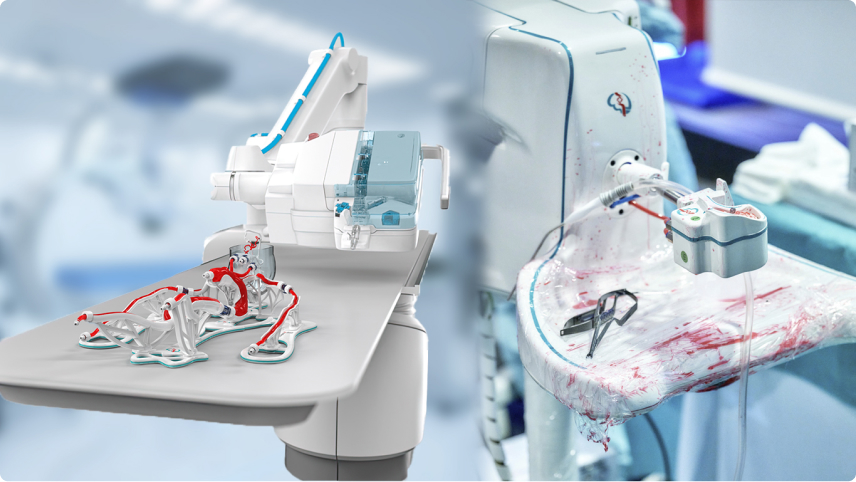
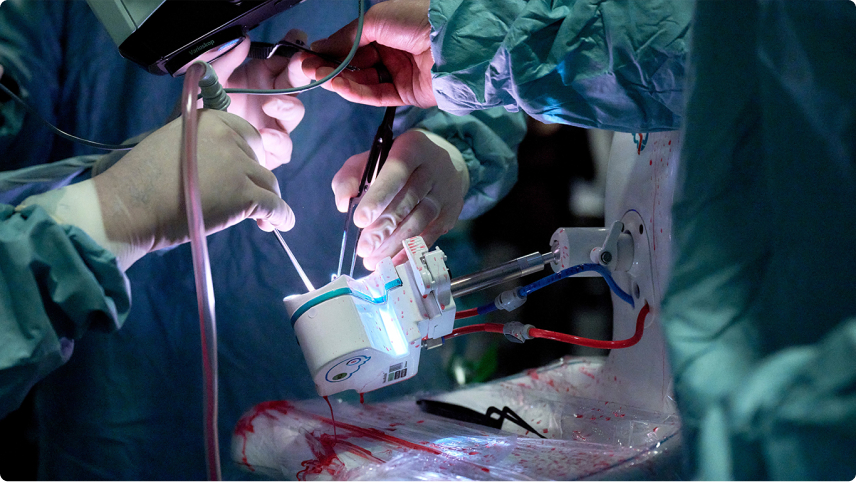
(On the Left) CathTrain, Interventional endovascular radiology
simulator flow models utilized under a robotic intervention, and (on the right) SurgTrain
simulator after training for complication case management for skull base procedures.
By integrating 3D printing, rapid AI-based image reconstruction
techniques, and physical and
digital twin creation, SurgeonsLab offers trainees quick access to virtual simulations
and real
physical microanatomies. SurgeonsLab’s simulators have been validated through clinical studies,
peer-reviewed publications, and demonstrations across continents, training over 2000 microsurgical
trainees for more than 2400 hours.
“SurgeonsLab's innovative approach has met the need for a realistic simulator that is able to
accurately mimic a true surgical environment using a mixed-reality setup bringing both virtual
and
physical surgical experience.”
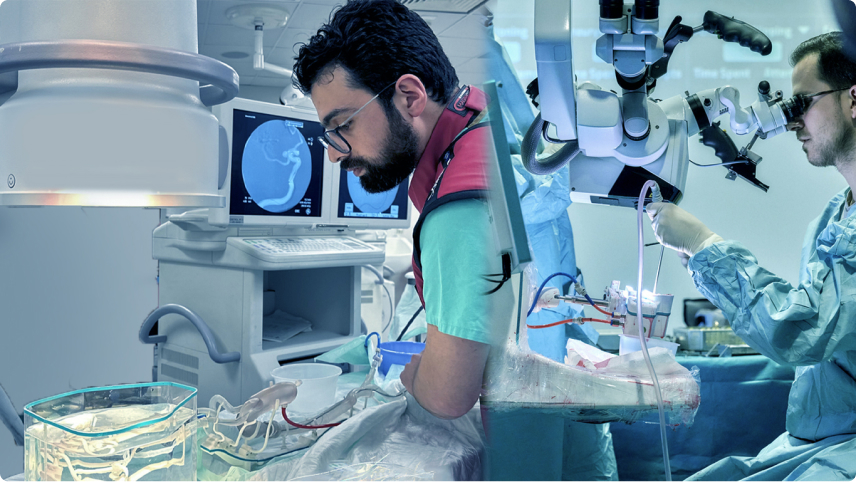
(On the Left) Interventional Neuro Radiology (INR) trainee utilizing
the endovascular flow models CathTrain under C-ARM angiography CT, and (on the right) a
Neurosurgical senior resident training with Zeiss Kinevo 900 on SurgTrain simulator for tumor
resection procedure
SurgeonsLab introduced a highly effective training method for microsurgical residents and doctors a
few years ago. Dr. David Zhang, a senior neurosurgical resident, found that the simulator provided
him with hands-on interaction better to understand the technical concepts of specialized
neurosurgical procedures.
Comparative Analysis
SurgeonsLab simulators are different from traditional ones like toys and demonstrators in that
they replicate the reality of surgical situations with a high degree of precision.
This simulator has addressed realism inadequacies, particularly in their lack of
patient-specificity and restricted scope to virtual environments. Presently, the evaluation and
quantification of performance in current training methods and complex case planning still need
to be improved.
“SurgeonsLab high-fidelity simulators have integrated an AI-powered performance matrix. This
enables users to assess their surgical skills and individual procedures, providing measurable
performance data within the training environment.”
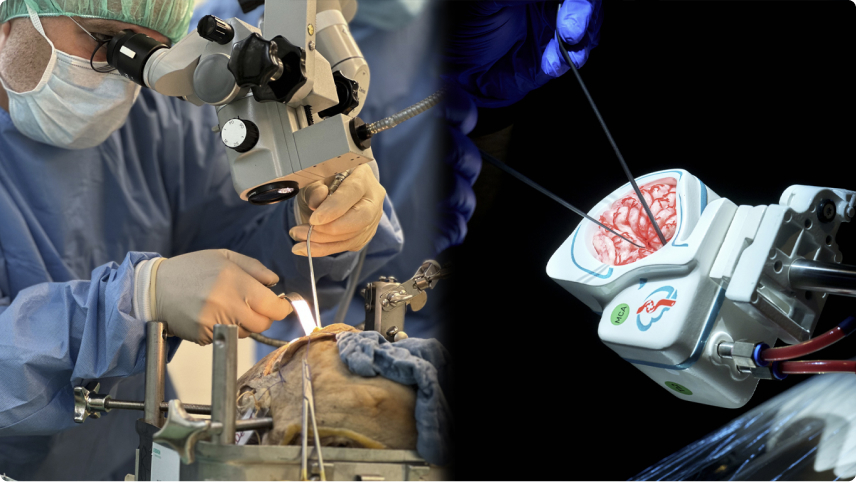
(On the Left) traditional cadaver-based setup, and (on the right)
NeuraBubble, a high-fidelity simulation model for training the Intracranial MCA aneurysm
clipping procedure
By integrating AI-powered feedback mechanisms, SurgeonsLab further
elevates the learning
experience. It also provides evaluations and guidance for further skill enhancement.
Additionally, it includes patient-specific exercises using authentic cases to enhance the
training experience. This helps ensure that aspiring surgeons can accurately simulate real-world
scenarios.
Dr. Jonathan
Rychen believes that SurgeonsLab simulators are the future of surgical training;
SurgTrain simulators will soon be an inevitable part of neurosurgical training, replacing older
methods such as cadaver-based training.
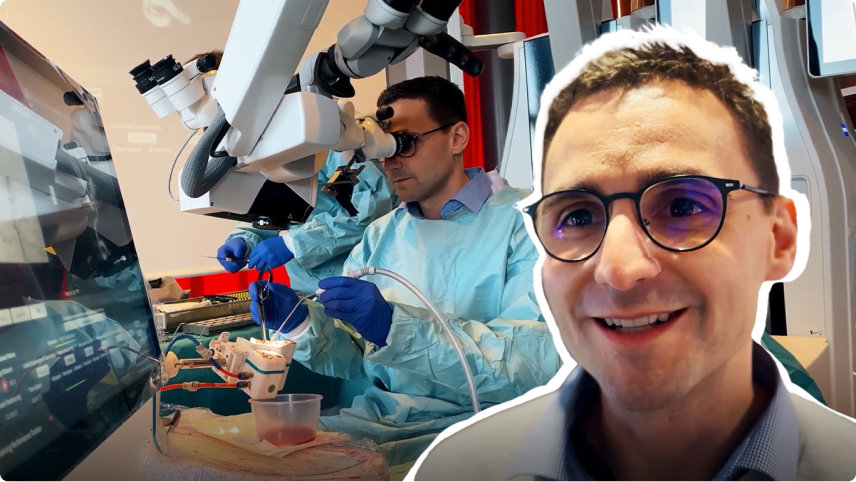
Dr. Jonathan Rychen performing hands-on high-fidelity treatment
training for one of the complex skull-base cases using SurgTrain, a microsurgical high-fidelity
simulator
SurgeonsLab distinguishes itself from other training solutions in several key areas:
Specialization: SurgeonsLab focuses on microsurgery
training, minimally invasive procedures,
and interventional radiology.
Realistic Simulation: The simulator provides
comprehensive haptics feedback, blood flow
simulation, true microanatomical detailing, and patient-specific software modules. This makes
it
very close to real-life training for surgeons under training.
Clinical Workflow Integration: Real clinical workflows
and patient-specific cases are part of
the SurgeonsLab training scenarios. This replicates actual surgical situations.
Technology and Platform: Accessible through a cloud-based
platform allows doctors-in-training
to use SurgeonsLab simulators online and access the training data easily.
Practical Skill Transfer: The platform helps impart
practical knowledge and skills that can
directly translate to real-world surgical scenarios.
Benefits of SurgeonsLab in Surgical Training
SurgeonsLab offers a revolutionary approach to microsurgical training. It addresses critical
challenges faced in imparting practical skills for complex procedures in head and neck surgeries.
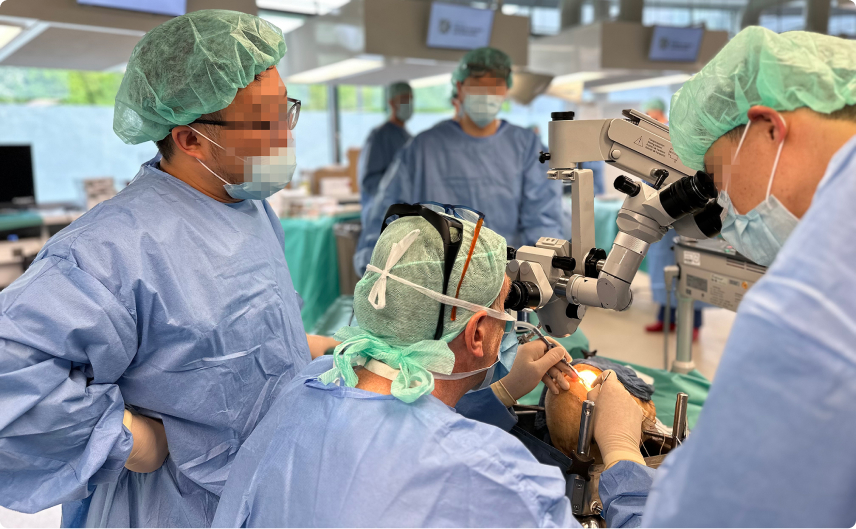
Example of a team surgical training with a group of Scrub nurses,
residents, and chief surgeon in handling a complex patient case using SurgTrain, a microsurgical
high-fidelity simulator
Realistic Simulation: The mixed reality 4D Simulator from
SurgeonsLab creates an environment
that imitates an operating theatre. This allows trainees to experience true-to-life surgical
procedures, helping them improve their practical skills.
Patient-Specific Exercises: This simulator allows trainees
to experience many patient-specific
exercises based on real-life cases. Such personalized training enables interns to exercise in
different scenarios with varied problems leading to different patients’ anatomy and conditions,
readying them for actual surgeries.
Repeated Sessions: The simulators developed by SurgeonsLab
are designed for multiple uses,
allowing trainees to benefit from repeated practice sessions in simulated real-life surgical
scenarios. These simulators offer the advantage of being reusable, enabling trainees to engage
in multiple sessions to refine their skills and proficiency in microsurgical techniques.
AI-Powered Performance Assessment: It also contains an
AI-powered performance matrix that
enables users to assess and quantify their skills. This helps surgeons determine the quality and
level of their competence, promoting continuous learning.
Drive Towards Value-Based Healthcare: SurgeonsLab’s
perspective on measuring treatment outcomes
may push future healthcare policies towards value-based insurance. This can ensure surgeons
deliver quality healthcare services based on their treatment outcomes and performance.
Case Studies and Testimonials
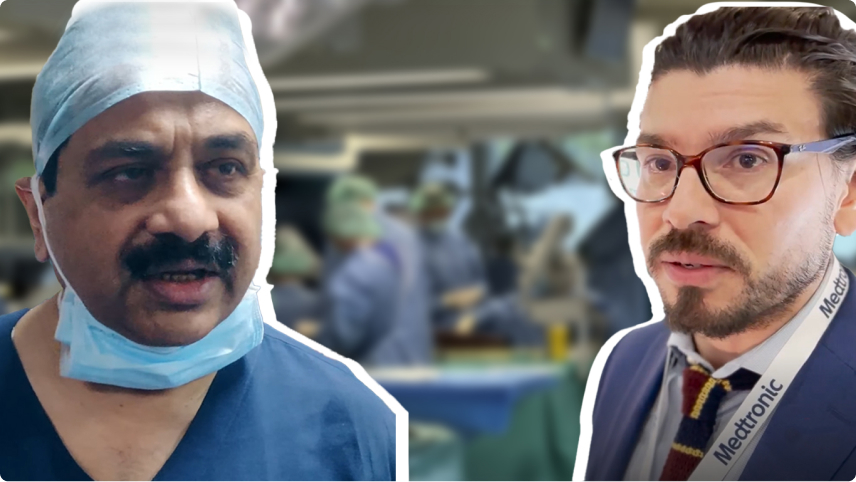
Dr Shailesh Rao, Head of the Neurosurgery Department ata St. Johns Medical College Hospital Bangalore, India, found the customized patient-specific physical models particularly exciting. He believes it will allow surgeons and residents to rehearse the surgery for training and pre-operative planning.
Dr Shailesh Rao, Chief Neurosurgeon at St. Johns Medical College Hospital Bangalore, India, and Prof. Dr. Javier Saavedra from Universidad del Rosario, Colombia Bogota, South America, highlighting the importance of SurgeonsLab simulators
Prof. Dr. Javier Saavedra from Universidad del Rosario, Colombia Bogota, South America, says his experience using the High-Fidelity SurgeonsLab Neurosurgical Simulator was astonishing. He found the texture of the tissues and the arteries to have a real life-like feel. He also believes this simulator will be valuable for residents' training.
Dr. Martin Hlavica, an upcoming Neurosurgeon, shared his insights after training with the SurgeonsLab simulator
Dr. Martin Hlavica, an upcoming Neurosurgeon, has highlighted the impact that SurgeonsLab's 4D simulation had on his training. He emphasized how the simulation allowed him to visualize a pathology effectively in a 3D life-like simulator platform. This helped him prepare an optimal approach and select the appropriate treatment strategy. This testimonial by Dr. Hlavica demonstrates how SurgeonsLab's simulator can provide a valuable and immersive experience. This, in turn, can significantly help improve surgical preparation and decision-making.
Future Prospects
The future of SurgeonsLab simulators appears promising. Potential developments include enhancements in realism and leveraging cutting-edge technology to mirror actual surgical scenarios further. Moreover, advancements in user interaction that incorporate more personalized and adaptive learning experiences are a future possibility.
“SurgeonsLab's future plans involve expanding its simulator's capabilities to cover various microsurgical sub-specialties like head, neck, throat, nasal, skull base, micro-cardiac, various micro interventional procedures, and endovascular approaches.”
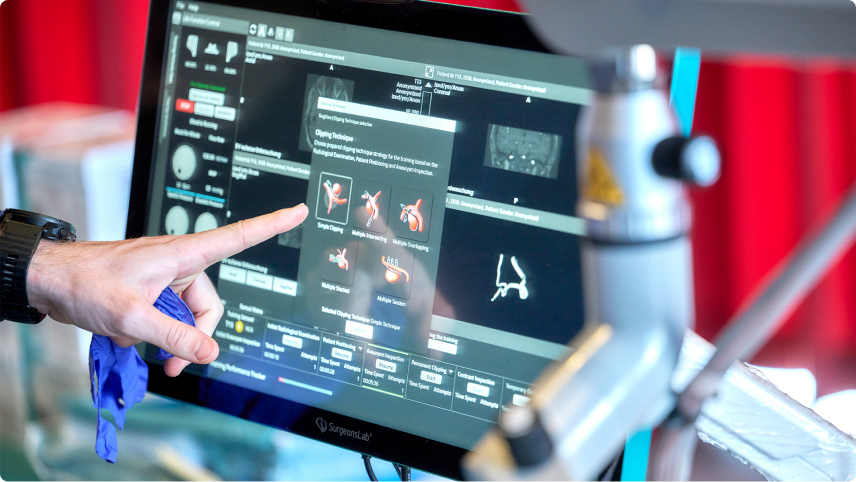
Surgeons interact with the training and planning software from SurgeonsLab simulators
This broadening scope seeks to cater to a wider audience while integrating mixed reality exercises into the training curriculum.
Conclusion
Due to their unmatched realism and technological advancements, surgeonsLab simulators stand out as revolutionary tools in surgical training. The simulator portfolio of SurgeonsLab's focus on realism and skill enhancement has firmly established them as the superior option compared to traditional models such as toys and demonstrators, as well as more advanced models. Recent peer-reviewed publications significantly prove the direct patient outcomes and improved patient safety using SurgeonsLab technology. SurgeonsLab's comprehensive approach has redefined the standards of CME credit systems in surgical education and set a new standard for immersive and effective training tools.