Within the ever-changing neurovascular intervention arena, commitment of funds for training is not an expense but a crucial part of overall planning. Medical centers, training programs, and physicians are constantly looking for ways to maximize educational funding to make every dollar allocated translate into increases in confidence, skills, and, most importantly, outcomes.
We examine here how our reusable endovascular simulation models allow institutions to gain the maximum training ROI while building a learning and performing culture.
The Hidden Costs of Conventional Training Models
Before we examine how reusability helps save costs, it's worth recognizing the costs associated with conventional training approaches that are largely overlooked.
- High consumable costs: many traditional Demonstrators use disposable elements or models that must be discarded after each practice session. These costs accumulate fast, making regular, routine practice expensive for institutions with tight financial constraints.
- Limited repetitive practice: when consumables are expensive, trainees get fewer chances to repeat a procedure. Repeated practice is one of the cornerstones of skill acquisition, so this can mean a slower learning curve, less confidence with real patients, and possibly more complications.
- Maintenance and replacement: even "cheap" traditional designs wear out quickly, requiring constant replacement or repair.
- Logistical burdens: ordering, receiving, and disposing of single-use models creates a time-consuming administrative burden on the educational institution.
- Environmental impact: single-use plastic and silicone models generate waste, a growing concern for sustainability-conscious institutions.
As discussed in our companion article, The Comprehensive Guide to the Reusable Liquid Embolic Demonstrator, simulation training is genuinely valuable only when it's both highly effective and affordable to run repeatedly.
Taken together, these issues reduce the real ROI of traditional training. The result is a loop in which budget limitations end up inhibiting the practical experience trainees need, in both quality and frequency.
The SurgeonsLab Advantage: A Multifaceted Approach to ROI
The foundation of our ROI proposition lies in the robustness and reuse capability of our simulation platforms and models. Unlike consumable models, ours are designed for intense, repeated use, giving them an extraordinarily long working life.
Unmatched Durability and Reusability
The key element of our ROI value proposition revolves around the durability and reusability of our simulation platforms and models. While most solutions are often considered disposable, our components are designed for repetitive, significant use.
- Reduced per-session cost: the setup cost for our reusable platform is distributed over hundreds, and possibly thousands, of training sessions, drastically reducing the cost per trainee per procedure and making frequent practice financially sensible.
- Long-term asset value: a one-time, long-term investment continues to add educational value to a training curriculum for years, unlike a consumable.
- Robust construction: high-quality materials are designed to withstand repeated catheterizations, embolic agents, and cleaning cycles without breaking down.
Enhanced Training Efficacy and Skill Acquisition
Optimizing ROI is about more than cost-saving — it's about maximizing training efficiency. Our reusable models can accelerate skill development and improve comprehension.
- Repetitive practice without penalty: a low cost per session lets trainers permit virtually unlimited repeated practice, essential for building the muscle memory, fine motor skills, and confidence required for intricate procedures such as AVM and DAVF embolization.
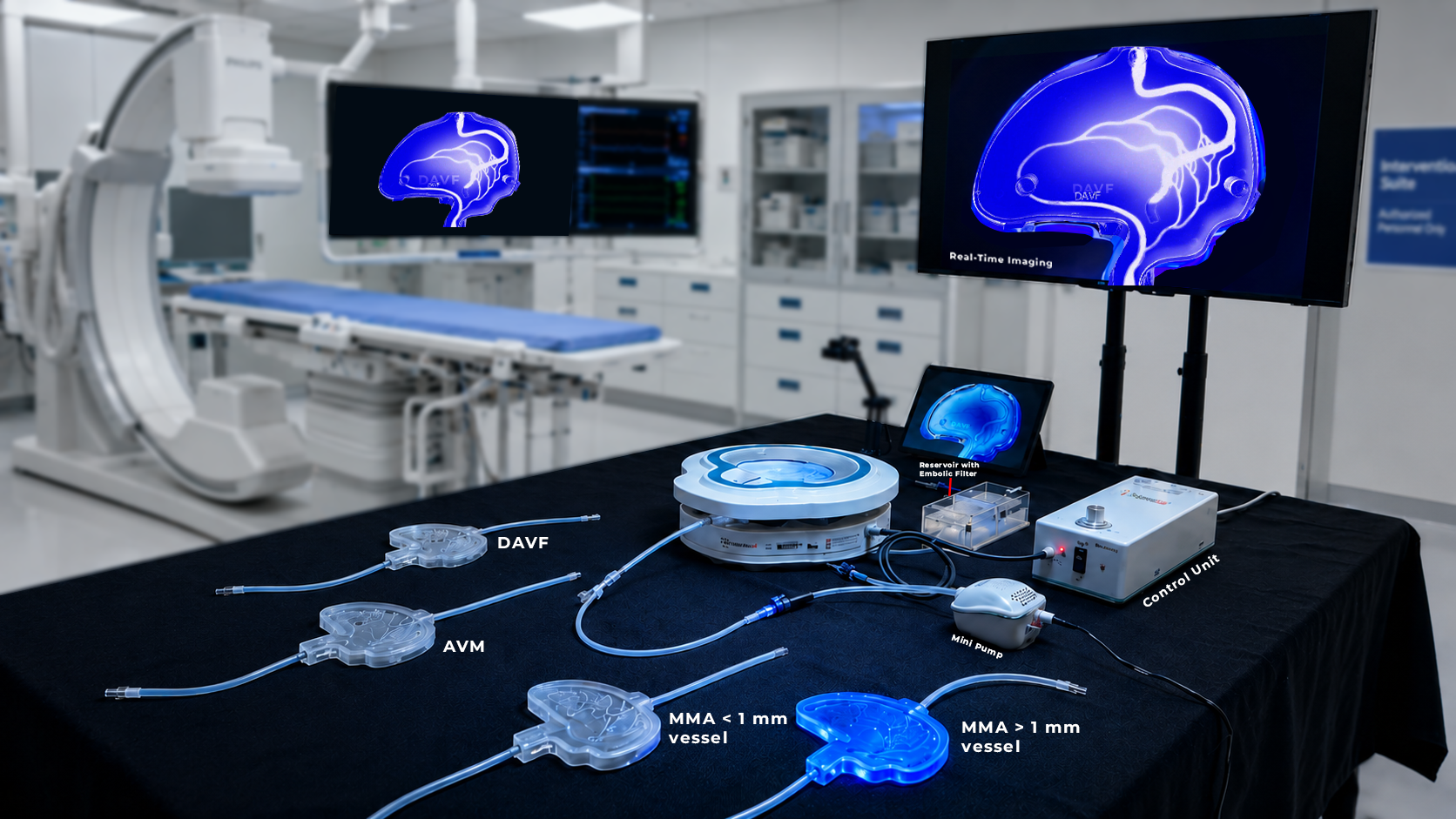
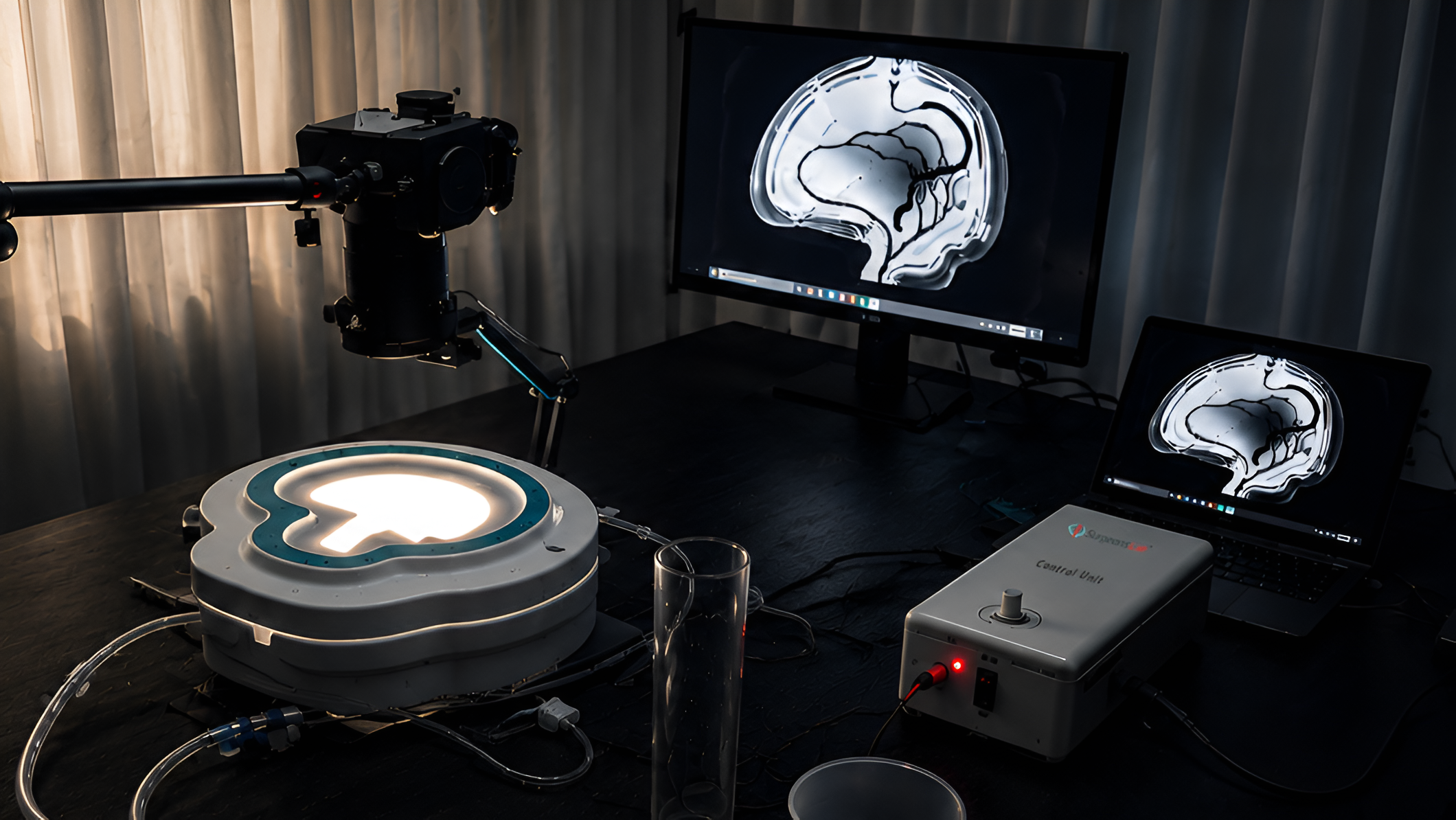
- High-fidelity realism: the models support a diverse range of embolic agents (DMSO, nBCA, particles, and coils), pulsatile flow, and angio-compatibility under fluoroscopic guidance — capabilities that help ensure skills transfer directly to the operative field and reduce the learning curve.
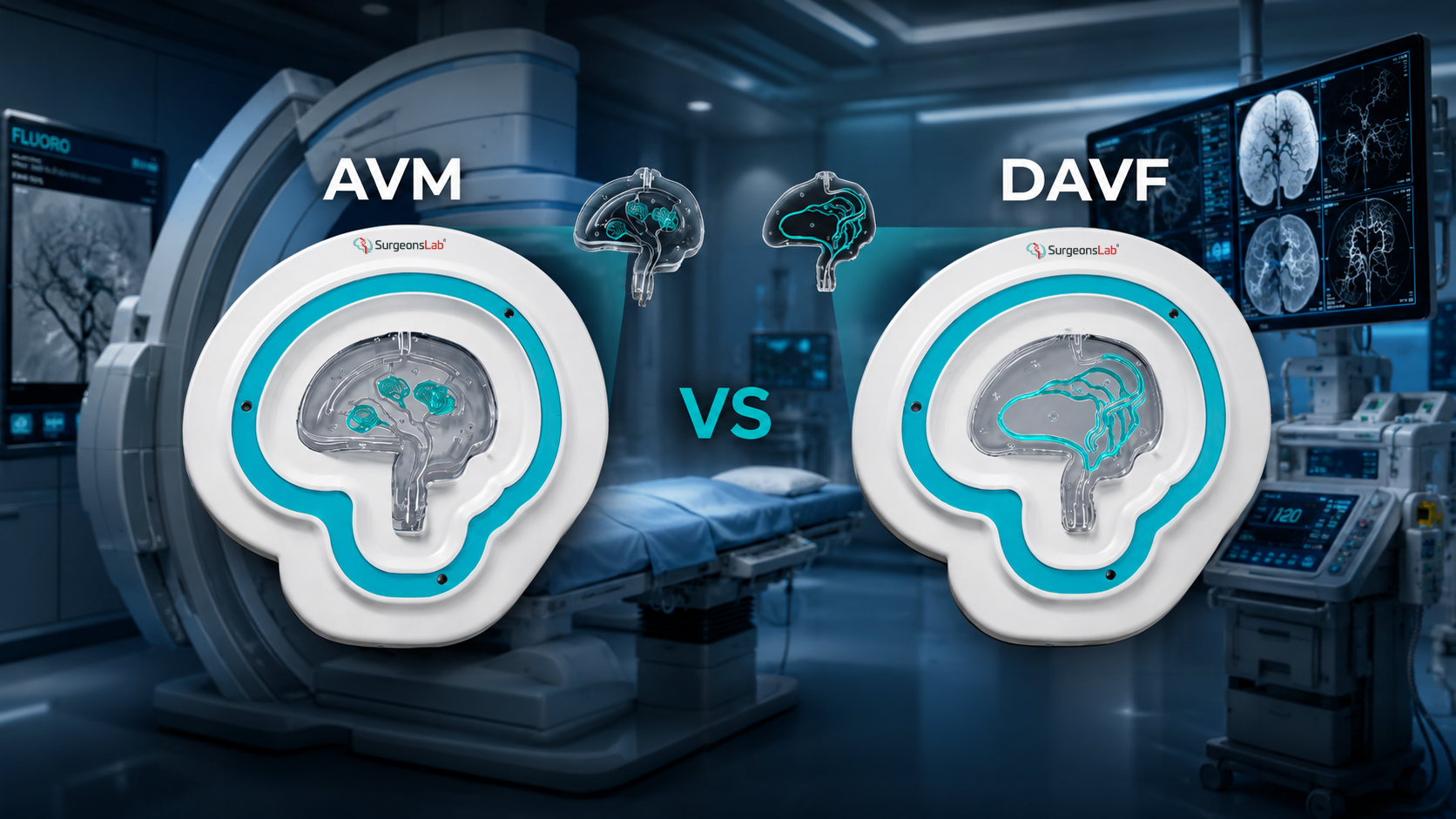
- Modular and diverse pathologies: quick model swapping across virtually all pathologies (AVMs, DAVFs, different MMA types, and lesions both under and over 1 mm) exposes trainees to a wide range of scenarios without requiring multiple dedicated Demonstrators.
- Immediate feedback: transparent, angio-compatible models give an instant visual read on catheter position, embolizing material deployment, and flow — a feedback loop that supports rapid correction and learning.
Operational Efficiency and Streamlined Workflow
Incorporating reusable simulation models also improves ROI through better operations.
- Simplified logistics: reusable models save institutions time, space, and resources related to ordering, stocking, and disposing of consumables, freeing admin and technical staff to focus on value-added education support.
- Quick setup and teardown: the electromagnetic fixation system allows fast model exchange, reducing time spent on scenario setup and teardown and increasing actual hands-on training time within a session.
- Reduced waste management: fewer disposable items lower both the expense and environmental impact of waste management.
Strategic Investment in Future-Proof Training
Investing in reusable endovascular simulation models is a strategic decision for several reasons.
- Adaptability to evolving procedures: the platform's modularity allows new models and pathologies to be added as neurovascular techniques develop, keeping training technology current.
- Attracting top talent: advanced simulation facilities are a major recruitment draw for fellows and residents, helping institutions both recruit and retain qualified candidates.
- Research and development platform: the same Demonstrators can support research, device testing, and the development of new procedural methods.
"An institutional decision for reusability is more than an economic commitment — it's a dedication to sustainable quality and to empowering trainees with maximum skill and confidence."
A Smart Investment in Neurovascular Excellence
Achieving optimal ROI on neurovascular intervention training relies on judicious, strategic investments with immediate and ongoing rewards. The SurgeonsLab reusable endovascular simulation models provide a strong value proposition through drastically decreased cost per session and greater training efficiency, driven by unequaled realism, modularity, and improved workflow.
An institutional decision for reusability represents an enduring commitment to sustainable quality and to giving trainees the skills and confidence to practice contemporary neurovascular care effectively — not only desirable, but essential.
Frequently Asked Questions
How do reusable endovascular simulation models improve cost-effectiveness for training programs?
Per-session training costs are extremely low since there's no need to discard costly consumables with each use. Long-term savings outweigh the upfront investment, enabling high-frequency hands-on practice at the institutional level.
Can these models truly replicate the complexity of real neurovascular procedures?
Yes. They incorporate pulsatile flow, support diverse embolic agents, and are angio-compatible and fluoroscopic-friendly to simulate live procedures, with high-fidelity realism built into the design.
How does the modularity of SurgeonsLab's reusable platform contribute to training ROI?
The modular platform provides rapid, tool-less swapping between models for different pathologies, including AVMs, DAVFs, and MMA. This gives users exposure to the widest range of conditions on a single platform, so training dollars are spent wisely and learning is maximized.
What is the lifespan of SurgeonsLab's reusable endovascular simulation models?
Models are built with long-lasting, robust materials for years of continuous, heavy use. Lifespan depends on usage and care, but the useful life is dramatically longer than that of a one-time disposable model.
Beyond cost savings, how do these reusable models enhance the quality of neurovascular training?
These models provide superior training because trainees can drill skills repeatedly, get instant feedback, and see a wide range of normal anatomy and pathologies. The result is a faster learning curve, greater trainee confidence, and safer, better patient care.